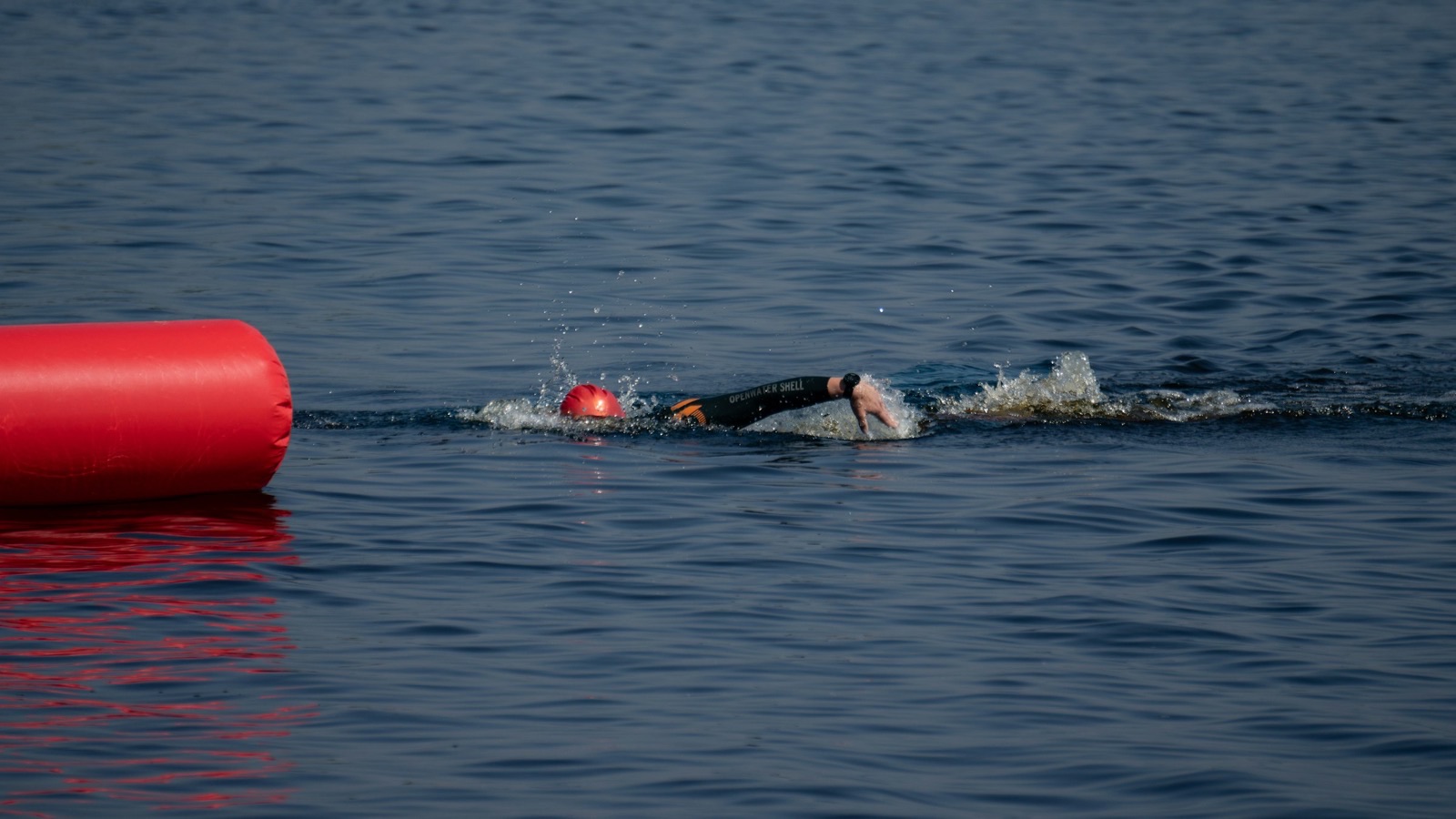
If you searched for a triathlon swim training plan, you likely want a clear path that builds endurance, pacing, and open-water confidence without taking over your entire week. This 12-week plan is built for beginner triathletes, runners or cyclists adding swimming, and former swimmers returning to tri training. You will practice relaxed breathing, steady pacing, and short intervals so you can hold a sustainable effort on race day. Open-water skills like sighting and bilateral breathing are layered into pool sessions so you can prepare without needing extra open-water time. If you can swim 50 yards at a time and want a structured path to a confident swim leg, this plan will get you there. You can start at any fitness level and build as the weeks progress.
Plan
Triathlon Swim Training Plan
A 12-week triathlon swim training plan for beginner triathletes to build endurance, pacing, and open-water confidence.
Plan at a glance
Use this summary to check fit, time expectations, and outcomes.
12 weeks
2-4
per week
30-55 min
800-1500 yards
Who it’s for
- Beginner triathletes building swim confidence for a sprint or Olympic race.
- Runners and cyclists adding swimming for the first time.
- Former swimmers returning to triathlon training after time away.
- Anyone who wants a clear 12-week swim structure with open-water prep.
Highlights
- 12-week progression built for sprint and Olympic triathlon swim prep
- 2-4 sessions per week with flexible options
- Pool workouts with built-in open-water skills and sighting practice
- Focus on relaxed breathing, pacing, and endurance confidence
Introduction
Plan overview
- Swim 750-1500 yards continuously with steady breathing
- Hold a repeatable pace you can take into race day
- Practice sighting and open-water skills without extra stress
Must-have
- Swimsuit
- Goggles
Optional
- Kickboard
- Pull buoy
- Swim buoy for open-water days
Readiness checklist
- Able to swim 50 yards at a time with basic breathing control
- Comfortable in shallow and deep water
- Cleared for exercise by a medical professional if needed
If any of these are missing, start with water-safety lessons or a short learn-to-swim course first.
Structure and progression
Phase 1
Weeks 1-3: Technique + base
Build comfort in the water with relaxed breathing, clean body position, and short repeats that feel manageable.
Phase 2
Weeks 4-6: Base + pacing
Extend the main sets with longer repeats and learn to hold a steady triathlon pace.
Phase 3
Weeks 7-9: Tempo + intervals
Add short intervals and tempo work to build aerobic power without losing technique.
Phase 4
Weeks 10-12: Open-water prep
Layer in sighting practice, pacing confidence, and longer continuous swims that feel race-ready.
Weekly options
Pick a schedule that fits your week. Keep Session A easy and always start there after time away.
2 sessions per week
2 sessionsBest for: Best if you are balancing bike and run volume or new to swimming.
Session A
Beginner Endurance Swim Workout (1000 yards)Steady aerobic base
Session B
Beginner Pace Swim Workout (1000 yards)Race rhythm and pacing
3 sessions per week
3 sessionsBest for: The most balanced option for progress and recovery.
Session A
Beginner Endurance Swim Workout (1000 yards)Steady aerobic base
Session B
Beginner Breathing Swim Workout (900 yards)Breathing control + sighting
Session C
Beginner Interval Swim Workout (900 yards)Short intervals for aerobic power
4 sessions per week
4 sessionsBest for: Best for faster progress if you recover well.
Session A
Beginner Endurance Swim Workout (1000 yards)Steady aerobic base
Session B
Beginner Technique Swim Workout (950 yards)Form focus
Session C
Beginner Pace Swim Workout (1000 yards)Race rhythm and pacing
Session D
Beginner Mixed Swim Workout (1200 yards)Longer mixed session
Workout library
These workouts power the plan. Save the ones you like and repeat them as needed.
A calm 800-yard beginner swim workout that builds comfort in water, breathing confidence, and steady pacing.
A 900-yard beginner breathing swim workout that improves breath control and introduces bilateral breathing with short repeats.
A 950-yard beginner technique swim workout to improve freestyle technique and stroke efficiency with simple drills and controlled repeats.
A 1000-yard beginner endurance swim workout for aerobic pacing, longer repeats, and continuous swimming confidence.
A 900-yard beginner interval swim workout with short repeats, pacing intervals, and consistent rest.
A 1000-yard beginner pace swim workout built for pacing control and even split training.
A beginner progression swim workout (1100 yards) built on gradual overload and sustainable progression.
A 1200-yard beginner mixed swim workout for pacing control, all-around technique, and steady endurance.
A 900 yard beginner pull swim workout that uses optional pull buoy technique to improve catch feel, body alignment, and upper-body endurance.
An 800-yard beginner kick swim workout to improve kicking technique, leg strength, and body-position control.
How to use this plan
How to choose your weekly schedule
Pick the schedule you can repeat for 12 weeks. Consistency matters more than packing in extra sessions when you are also biking and running.
- 2x per week: best if you are balancing a heavy bike/run load or new to swimming. This is enough to improve if you stay consistent.
- 3x per week: the sweet spot for most triathletes. You will improve steadily without feeling overworked.
- 4x per week: choose this if you recover well and can keep most swims easy and controlled.
If you are unsure, start with 2x or 3x for the first two weeks and add a session later if you feel good.
How to layer in open-water skills
You can build open-water confidence inside the pool. Use these options once per week starting in week 4:
- Sighting practice: lift the eyes every 6 to 8 strokes during a main set repeat, then return to smooth breathing.
- Bilateral breathing: alternate breathing sides every 25 or 50 to stay comfortable in choppy water.
- Pack simulation: swim in the middle of the lane and practice staying relaxed when you feel crowded.
If you have access to open water, replace one pool session every two weeks in weeks 8 to 12. Keep the swim easy and focus on calm breathing.
How to read the workouts
Each workout is written in sets:
- Warm up: easy swimming to settle in.
- Drill set: technique work that improves body position and breathing.
- Main set: steady repeats that build endurance and pacing.
- Skill set: short focused work like kick or pull.
- Cooldown: easy swim to bring the heart rate down.
If a set says 4 x 50, swim 50 yards four times with the listed rest. Use the
rest to reset breathing and start the next repeat calmly.
Effort guide for triathletes
Most triathlon swim training should feel controlled. Use this simple scale:
- Easy (3 to 4 out of 10): you can breathe every 2 to 3 strokes and feel relaxed. Most of your swimming should feel like this.
- Moderate (5 to 6 out of 10): you are focused but still in control. This is the pace you will use on the main sets.
- Strong (7 out of 10): short repeats only. You finish a rep feeling challenged but not depleted.
If you feel like the moderate pace is too hard, slow down and keep the rhythm smooth. The goal is sustainable pacing, not speed.
Progression across 12 weeks
- Weeks 1 to 3: focus on technique, breathing control, and short repeats.
- Weeks 4 to 6: add longer repeats and steady pacing.
- Weeks 7 to 9: include tempo and intervals for aerobic power.
- Weeks 10 to 12: add sighting practice and longer continuous swims.
If a week feels too hard, repeat the previous week. If you feel strong, add one repeat to the main set or add a third session, but only change one thing at a time.
Sample weekly layouts
- 2x: Tue and Fri keeps a rest day between swims.
- 3x: Mon, Wed, Sat balances swimming with bike and run days.
- 4x: Mon, Tue, Thu, Sat works well if most swims stay easy.
Avoid stacking hard swim days right before intense bike or run workouts. Keep the swim relaxed when your legs are tired.
Tracking your progress
After each swim, write down three things:
- Total distance and time
- One pacing note (easy, steady, or strong)
- One open-water skill you practiced
Small notes help you see improvement and repeat the plan for future races.
Coach notes
Open-water skills in the pool
- Practice sighting by lifting the eyes every 6 to 8 strokes during a main set.
- Keep one goggle in the water when you breathe to stay balanced.
- Learn to breathe bilaterally so waves do not throw off your rhythm.
Technique cues that transfer to race day
- Exhale underwater so the breath feels easy at the surface.
- Keep the kick light to save energy for the bike and run.
- Push off in a tight streamline to reinforce body line.
Common triathlon swim mistakes
- Starting too fast in the first 100 yards and losing control of breathing.
- Overkicking early and spiking effort.
- Skipping drill work that keeps the stroke efficient.
Coaching tip
For most triathletes, the fastest swim is the one you finish relaxed. Keep the effort smooth so you can exit the water ready to ride.
FAQs
How many times per week should I swim for triathlon training?
Two to four swims per week is enough for beginner triathletes if you stay consistent.
Do I need open-water swims to follow this plan?
No. The plan includes open-water skills that you can practice in the pool.
What race distance does this plan support?
It is designed for sprint and Olympic distance triathlons.
Can I follow this plan in a 25 meter pool?
Yes. Keep the structure and adjust distances to the nearest 25 meters.
What if I miss a week?
Repeat the previous week at the 2x schedule and build back up.
Get triathlon swim updates
Join the Pocket Swimmer list for weekly triathlon swim sessions, open-water tips, and early access to the Pocket Swimmer app.
This plan is for informational purposes only and is not medical advice.